My Own Schmidt Moment
Karl Patterson Schmidt, I salute you.
When I was doing my time at Whitman College, I had a reptilians & amphibians class. It was really fun and informative, partly because the professor was so passionate about reptilians that she had at least three snake tattoos. At one point, we were reviewing various venomous snakes and where they lived, how they lived, etc., and it became a sort of game.
I'm iffy on the finer details, but at some point we reviewed which scientists discovered snakes and their kinds of venoms. Something like that. It was near the beginning of 2023 and it's 2026 now so bear with me.
One scientist in particular caught my eye and my respect for their way of relaying information about the effects of Boomslang venom. It was the renowned American herpetologist Karl Patterson Schmidt, born in 1890 and died in 1957. He was handling a juvenile boomslang snake, and mistakenly thought its fangs were not the venom-dripping kind when it bit him on the thumb.
Someone with common sense might have panicked at the injury and gone to the hospital. I'm not sure why he didn't, other than he probably didn't think the bite would be that damaging.
So what does a scientist do when they are suddenly placed in a state of an unknown, fascinating discovery? This Schmidt wrote it down.
On September 25th, 1957, he recorded his observations of how the venom was affecting him. He meticulously wrote entries on his nausea, fever, pulse, and progressive uncontrollable bleeding. Despite it being his very own life that was slowly being snuffed out, he wrote his observations with scientific detachment. That detailed account is how we know and understand the severity of boomslang venom. He might not have known he was staring into the face of danger at the moment of first bite, but he stayed staring and recorded what he saw standing before the void until he could write no longer. The spirit of a true scientist, indeed.
Karl Patterson Schmidt, I salute you.
Relating to that true scientific spirit, I thought to record an incident I had for anybody who has yet to experience a bee sting and fears the unknown horror of it.
I had a record of 25 years without being stung by a bee, starting from birth and ending during a walk with my sister, where we passed by a wooden pole that held electricity wire (or something). I was closer to the pole, listening to my sister talk and probably looking at the ground to avoid stepping on certain things, when I felt the sensation of a sharp rock hitting my upper arm.
Startled, I looked around for who threw the rock. Nobody seemed to be the culprit, but my eyes finally settled on a group of bees bunched up on the pole. And then my ears finally registered the buzzing of bee wings near my vicinity.
I connected the dots. And then I rushed forward, away from the bees, with my sister in tow. My upper arm had two bumps on it, one that was probably a pimple waiting to manifest and the other was a slowly-forming bump with a puncture hole in the center. Once that bump appeared fully formed, we confirmed that it was in fact a bee sting. That I've finally been stung. And it didn't even hurt, really.
I mean, yes there was pain. The fading stinging and throbbing that pretty much matched how you'd feel if that area was hit by a sharp pebble or rock. Something thrown by a petulant or wild child, perhaps. But as fast as it came, it left just slightly more slowly. That area was a tiny bit stiff, as if I'd just been given a vaccination shot. But that stiffness left just as quickly. In thirty minutes, there was nothing to feel; nothing to fear.
Because allergies are inheritable and my parents aren't allergic to bee stings, I assumed I wasn't allergic either. Fortunately, that was true. I could get walk on with my day.
You may be wondering if I was scared in that moment of pain and afterwards. No, I was bewildered. And then surprised, then resigned to the fact that my lifelong streak had ended and it wasn't really my fault, and then I felt happy and curious. I declared to my sister that this day had been a great day. I walked with the clinical detachment of a scientist for the next hour, observing the sensations of my arm and noting whatever effects could have come from the sting.
I still recall that memory with curiosity and detachment. I'm happy to learn what a bee sting felt like firsthand, and I'm happy that it wasn't as bad as I'd always feared. I've asked people who have been stung before what the sensation felt like, and though I got anecdotes and their subjective views of pain levels, it really is different to experience the event yourself.
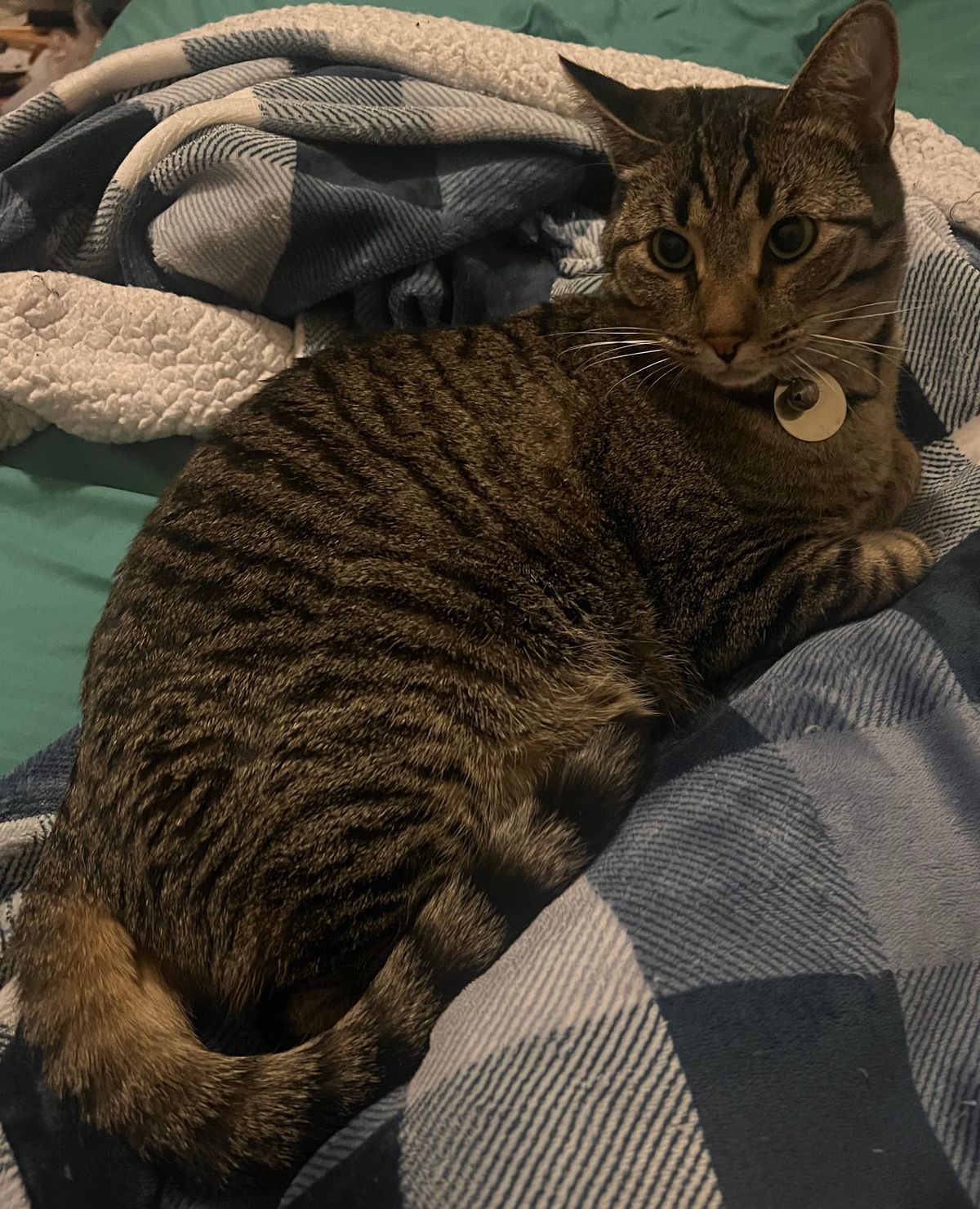
Am I afraid of getting stung again? No, actually. One thing about learning what something feels like - be it a slap or a sting or dumping your hand into ice-cold water - is that you know what to expect. With knowing what to expect, you no longer have the fear of the unknown. You have something to compare to other somethings. And that bee sting was a lesser-pain sensation. I've definitely gotten worse injuries from my dog and my cat.
Does this mean that I'm going to stick my hand into a hive of bees or willingly walk near a bee swarm for some jollies? No, of course not. But I had my own Schmidt moment.
For those who were just as scared, just as curious, and just as scientifically observant as I am of being stung by a bee, be not afraid. You've probably been hit with a rock before. If not, go outside and ask a friend to throw a rock at you. The hit from the rock will either feel worse or the same.
For those who are allergic to bee stings, please avoid getting stung. Thank you.