The Importance of Certainty
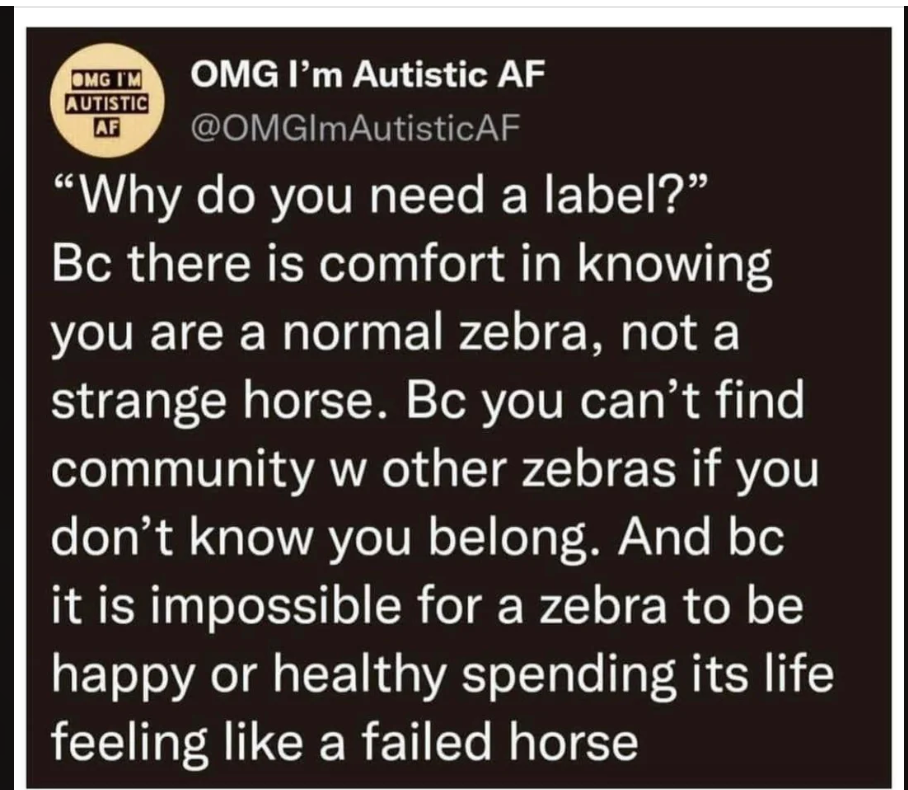
Sometimes I like to surf reddit. Since my recent autism diagnosis, I was feeling curious and decided to look at the subreddit catering to autism memes. Boy, did I certainly feel seen.
It's only been three months into this year, but it feels like the theme is certainty.
Sometimes I like to surf reddit. Since my recent autism diagnosis, I was feeling curious and decided to look at a subreddit catering to autism memes. Just to see what it's like; to see if my experiences fit in.
Boy did I feel like I fit. Normally I wouldn't really talk about subreddits - it's neither here nor there other than some funny stuff I share with my high-functioning best friend - but one post from it put into words a feeling of mine that felt particularly powerful.
Relief of that certainty.
When I think of that word, I remember a core memory that still echoes around in the back of my head from when I must have been eleven or twelve years old. I was sitting in front of the fireplace probably petting my dog, Sasha. My paternal grandmother had come up to me and asked in an accusatory manner, "Do you want to have OCD?"
This interaction had taken place after dinner, where I'd shared with my parents - and the grandparents that lived with us - the symptoms I'd experienced that corresponded with OCD (Obsessive Compulsive Disorder) and ADHD (Attention Deficit Hyperactivity Disorder). My mom, (understandably) wanting to have normalcy, denied my experiences. My dad, who shared my experiences and most certainly passed on the mental disorder genes to me, accepted what I said. My paternal grandfather, on the other hand, had looked at me most confidently and self-assuredly said, "You are absolutely normal."
I wasn't normal. Normal wasn't having disturbing compulsive thoughts, or obsessing over small or anxious things for way too long. Normal wasn't feeling like I had done something wrong just by talking or saying the wrong thing. Normal didn't feel like my thoughts were spiraling out of control so much I dissociated, or stared into space. Being told I was normal felt wrong.
The bluntness of her question, the lack of understanding in her tone, and that feeling of certainty about my wrongness led me to respond to her angrily. I don't really remember what I said, but it was something along the lines of not wanting OCD but wanting to know if I had it.
After all, no one wants a mental disorder. But knowing that you have it makes everything easier to explain. It means there's a reason for the madness, a cause for the craziness. Something in you that you can't control, that isn't your fault - even though you are responsible for how you manage it.
When I got officially diagnosed with OCD and ADHD in college, I made managing the former my priority. I thought my OCD was giving me auditory hallucinations that kept me from going to sleep at night. Turns out I was wrong, the sounds I was hearing were real (and that I was partially deaf). But with OCD medication in my system, I finally had a baseline for normalcy. I knew what I should have felt; what neurotypicality normally felt like. Of course, a little bit of anxiety is normal in life. But not the rumination, the stuttering, the panic, the depression, and the shock and disgust that came with compulsive thoughts.
These are the symptoms that come flooding back into my nervous system when I forget to take my OCD medication. It's not fun.
Getting ADHD medication turned out to be another fun field trip of learning what a baseline normalcy felt like. Turns out, it should be normal to feel like you are capable of regular things. Or at least, it should be normal to be able to focus.
In my last few months of being on my mom's insurance, I decided that I needed to confront one last mental uncertainty I had. It was a question my therapist had asked me one day years ago, "Have you considered getting tested for Asperger's?"
I know that term is outdated, but she used those words. These days it really is just 'autism' or 'being on the autism spectrum'.
And at the time of her question, I already knew I was dealing with OCD, ADHD, and a tinge of depression. I did not want to add another condition to my mental list of 'what the hell is wrong with me'. I didn't want to even consider it. No way, no how. I can deal with these things. I can't deal with being autistic on top of it.
But I had to confront it one day. Best to do it when I didn't have to pay the full price without insurance. I took the day-long exam, answered the questions, and went home feeling nervous that I somehow faked the symptoms of autism that littered my behavior. That I lied to myself and I never had that in the first place.
It's really easy to think that you're faking it when you know so much about the psychology. When you have friends with the condition and you talk to them about it. It's just like they say in psychology 101, "if you think you have this mental disorder, wait a couple months. If you still think you have it, then get it checked out."
When I got the exam results back, the doctor asked if I had any questions. He'd used technical jargon, and though I knew what that jargon meant I needed to know, in my own terms, what I had. I told him, "Am I autistic? Yes or no."
He said yes. Clarified that I was on the high-functioning end of the spectrum, meaning I didn't need so many accommodations to my daily work life or school life to be successful or to thrive. But yes, I had autism.
Let me tell you, it wasn't like I wanted to cry from the relief. But it's like there was finally something solid under my feet. A baseline explanation for my 'weirdness'. A reason why I had trouble making friends, or why it felt so hard to relate to others in an attempt to become friends with them. It wasn't all my fault; it wasn't all my doing.
This alleviation of fault was something I needed to know about. Did I want my OCD, my ADHD, my autism, my everything-bad-because-of-bad-genetics? No. Of course not. Of course I wish I could have been neurotypical, normal, baseline. But knowing that I'm not means that I've just taken a step towards managing what I have and what I am.
After all, to solve a problem you first need to acknowledge its existence.
Before the doctor told me of my autism diagnosis, he said that I was brave for seeking help. It wasn't bravery. Bravery is doing something - taking action - despite feeling fear of enacting. I didn't feel any fear for this journey. It was what I had to do; it was my mantra.
Needing to know is a lifelong mantra. It's why I ask so many questions. It's why I'm into science. It's why I do research deep dives. It's why I have a good internal state of awareness. It's how I am. It's normal for me.
It's not bravery, as the doctor said. It's the chase for certainty.
I'll be going back to that subreddit, though it seems to update slowly. It was funny and relatable, and I feel relieved to know for certain why I can relate to it.